

Building Fortresses of Care: A Dual-Focus Training on Child Safety and Staff Wellbeing
17 November 2025
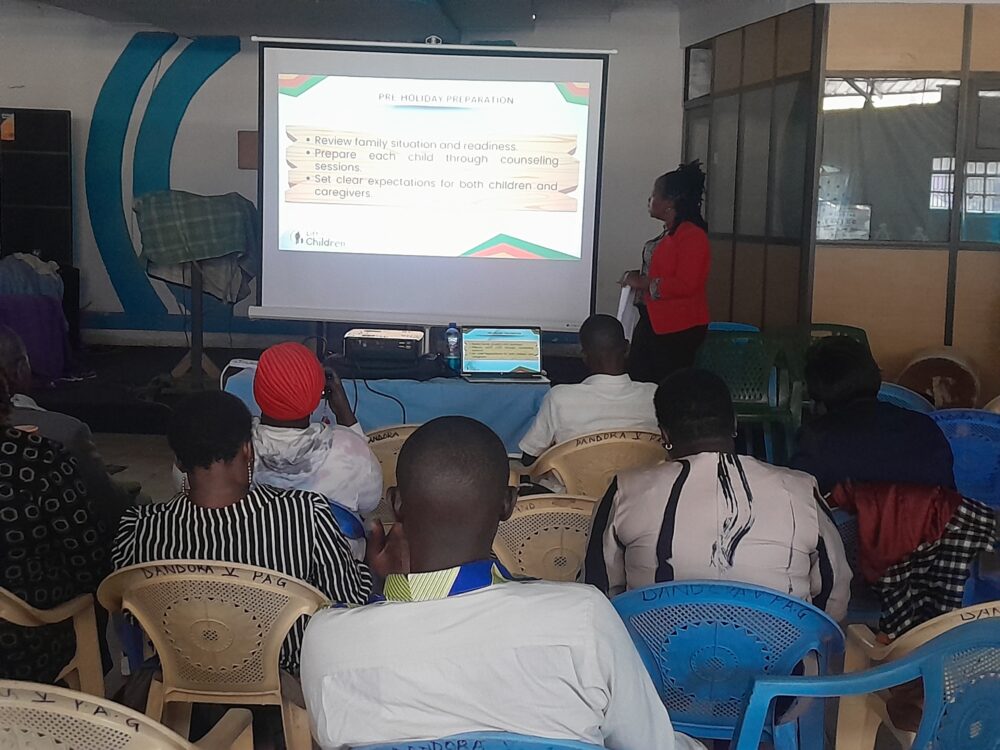
At Lift the Children, we believe that creating a lasting impact requires a 360-degree approach. It’s not enough to focus solely on the child; we must also fortify the entire system that supports them. This philosophy was brought to life in our recent training for directors, managers, and social workers from our partner Children’s Charitable Institutions (CCIs).
The session was built around two essential, interconnected resources: “Preparing Children for School Holidays” and “Understanding and Addressing Staff Burnout.” Here’s a look inside this transformative day.
Safeguarding Childhoods During Holiday Visits
The first half of our training, guided by the resource prepared by Elizabeth Ngige, focused on a critical and often stressful time: school holidays. We moved beyond simple logistics to address the heart of the matter.
Key takeaways we explored:
-
Emotional Readiness: How to counsel children through the mixed emotions of excitement and anxiety about visiting family.
-
Proactive Safety Planning: The crucial practice of developing a personalized safety plan for each child, including reinforcing body safety rules.
-
The Lifeline of Coded Language: We introduced and practiced using discreet codes—like “I forgot my blue book” to signal “I am not safe.” This empowers children to seek help without escalating risk, a potentially lifesaving strategy.
-
Family Engagement: Preparing families through orientation on positive parenting and setting clear expectations to create a harmonious visit.
This comprehensive approach ensures that family reintegration efforts are not just hopeful, but safe, structured, and supportive.
Fortifying the Caregivers: The Battle Against Burnout
The second half of our training, led by the guide from Terry Gatheca, addressed a silent crisis in the care sector: staff burnout. We acknowledged that the very compassion that drives our caregivers can also make them vulnerable to exhaustion.
Our discussion centered on:
-
Recognizing the Signs: Identifying the symptoms of burnout—from emotional exhaustion and cynicism to physical fatigue—in themselves and their teams.
-
Understanding the Ripple Effect: Connecting the dots between a burnt-out caregiver and the quality of care a child receives. Staff wellness is a direct child protection issue.
-
Practical Prevention Strategies: We equipped leaders with actionable tools, including:
-
Fostering a culture of open communication and peer support.
-
Implementing regular supervision and debriefing sessions.
-
Leading by example in practicing self-care and setting boundaries.
-
The power of simple, consistent recognition to boost morale.
-
The message was clear: Caring for our team is not a separate activity from our mission; it is fundamental to achieving it.
Conclusion: A Unified Vision for Sustainable Care
The true power of the training was in weaving these two themes together. A well-supported, resilient caregiver is equipped to provide the consistent, patient, and emotionally present care that a vulnerable child needs to heal. Conversely, a child who feels safe, secure, and supported places less chronic emotional strain on the caregiver.
By addressing both child safety and staff wellbeing, we are not just putting out fires. We are building fortresses of care—strong, resilient, and sustainable systems where both children and those who dedicate their lives to them can truly flourish.